
Table of Contents
- Why Does My Steering Wheel Shake at Highway Speeds?
- Can Unbalanced Tires Make the Steering Wheel Shake?
- Why Does My Steering Wheel Shake When I Brake?
- Can Bad Tires Cause Steering Wheel Vibration?
- Does a Shaking Steering Wheel Mean I Need an Alignment?
- Could the Suspension Be Causing the Shaking?
- Why Did My Steering Wheel Suddenly Start Shaking?
- Is It Safe to Drive With a Shaking Steering Wheel?
- How Do I Know What Is Actually Causing the Vibration?
- Stop Guessing and Let Us Take a Look
A steering wheel that suddenly starts shaking can make even a normal drive feel a little sketchy. Maybe you only notice it once you get up to highway speed. Maybe it happens when you hit the brakes. Or maybe the vibration seems to be there almost all the time.
The good news is that the way your car shakes can give a technician some useful clues about where to start looking.
Tires and wheels are common causes, but they are not the only possibilities. Brake problems, worn steering or suspension components, tire damage, and other mechanical issues can all change how your vehicle feels behind the wheel.
At VAS Tires, you do not need to diagnose it before bringing the car in. Tell us when the shaking happens, how fast you are going, and whether anything else feels different. We can take it from there.
Why Does My Steering Wheel Shake at Highway Speeds?
If the car feels normal at lower speeds but the steering wheel starts vibrating around 50, 60, or 70 mph, your tires and wheels are a good place to start.
An out-of-balance tire and wheel assembly is one of the most common sources of highway-speed vibration. Tire damage, uneven wear, incorrect inflation, or a bent wheel can also cause a shake that becomes more noticeable as speed increases.
The National Highway Traffic Safety Administration notes that proper tire balancing helps wheels rotate correctly without causing the vehicle to shake or vibrate.
VAS Tires provides tire mounting, balancing, rotation, repair, and tire replacement services for drivers in Sharon Hill and the surrounding area. Vibration or shaking at certain speeds can be a sign that your tires or wheels need attention.
Can Unbalanced Tires Make the Steering Wheel Shake?
Yes, and this is one of the first things worth checking when the vibration happens mostly while driving at higher speeds.
A tire and wheel assembly is supposed to rotate evenly. When its weight is distributed unevenly, that imbalance creates vibration as the wheel spins. The faster the wheel turns, the more noticeable the vibration can become.
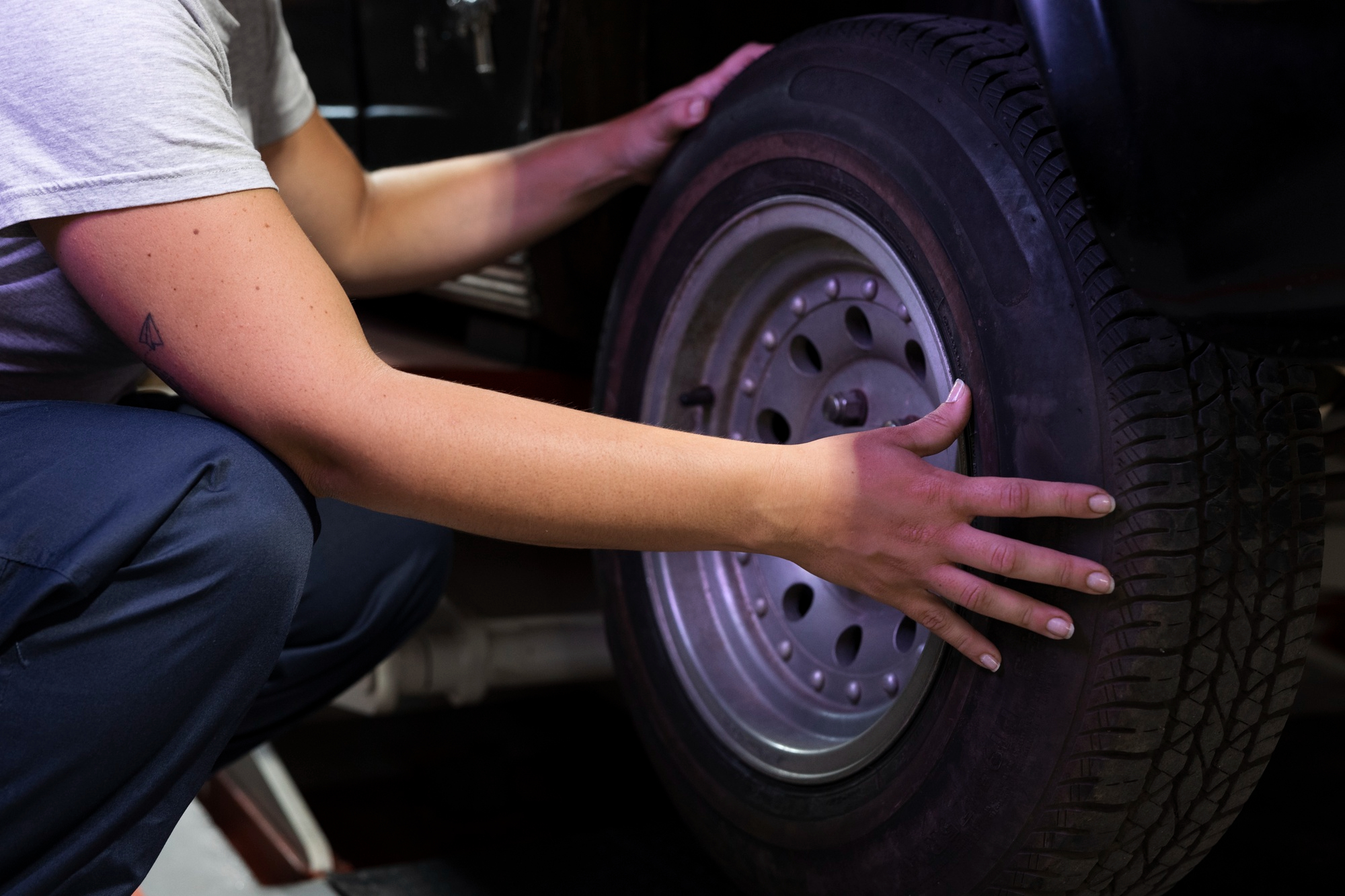
A professional wheel balance can identify the imbalance and add small corrective weights where needed.
That does not mean balancing fixes every steering wheel vibration. If the tires are damaged, badly worn, out of round, or the wheel itself is bent, there may be another issue to address.
VAS offers wheel balancing and alignment services as part of its auto mechanic services.
Why Does My Steering Wheel Shake When I Brake?
If the steering wheel feels smooth while cruising but starts shaking when you press the brake pedal, that changes the conversation.
Brake-related vibration can come from problems involving the brake rotors, pads, calipers, or other braking components. You may notice the steering wheel shaking, the brake pedal pulsing, or both.
Other signs worth paying attention to include:
- Squealing or grinding when braking
- The vehicle pulling to one side
- A pulsing brake pedal
- Longer stopping distance
- Vibration that becomes stronger with harder braking
A steering wheel vibration that appears specifically during braking should be inspected rather than automatically blamed on tire balance.
VAS Tires provides brake repair, brake pad replacement, rotor inspections, and other auto repair services.
Can Bad Tires Cause Steering Wheel Vibration?
They can.
A tire does not have to be flat to cause trouble. Uneven tread wear, low or inconsistent tire pressure, internal tire damage, poor balancing, or an improperly seated tire can all affect how smoothly the vehicle rolls.
Take a look at your front tires and compare them. If one has noticeably different wear, bulges, exposed cords, or very low tread, that deserves attention.
Tire pressure is also worth checking. Use the pressure listed by the vehicle manufacturer, usually found on the label inside the driver’s door, rather than the maximum pressure printed on the tire itself.
NHTSA recommends checking tire pressure and tread regularly and notes that proper balancing and alignment can help maximize tire life and vehicle safety.
If something looks questionable, VAS can inspect the tires and help determine whether you are dealing with a repair, balance, rotation, alignment, or replacement issue. Their tire services include new and used tires, flat repair, mounting, balancing, rotation, and related service.
Does a Shaking Steering Wheel Mean I Need an Alignment?
Not automatically.
Alignment problems are more commonly associated with symptoms such as:
- The car pulling to the left or right
- An off-center steering wheel
- Uneven or rapid tire wear
- The vehicle feeling like it does not track straight
Alignment and tire wear can also be connected. A vehicle that has been out of alignment for a while may develop uneven tire wear, and that tire wear can contribute to vibration.
This is why it usually makes more sense to inspect the whole situation instead of assuming every steering complaint means the vehicle needs an alignment.
Could the Suspension Be Causing the Shaking?
It is possible, particularly if the vibration comes with other changes in how the vehicle handles.
Worn steering and suspension parts can allow movement where there should not be much movement. Depending on the vehicle and the part involved, you may also notice:
- Clunking over bumps
- Loose or sloppy steering
- The vehicle wandering on the road
- Uneven tire wear
- Pulling to one side
- Changes in ride quality
Components such as tie rods, ball joints, wheel bearings, control arms, shocks, and struts can all affect steering and handling when they wear.
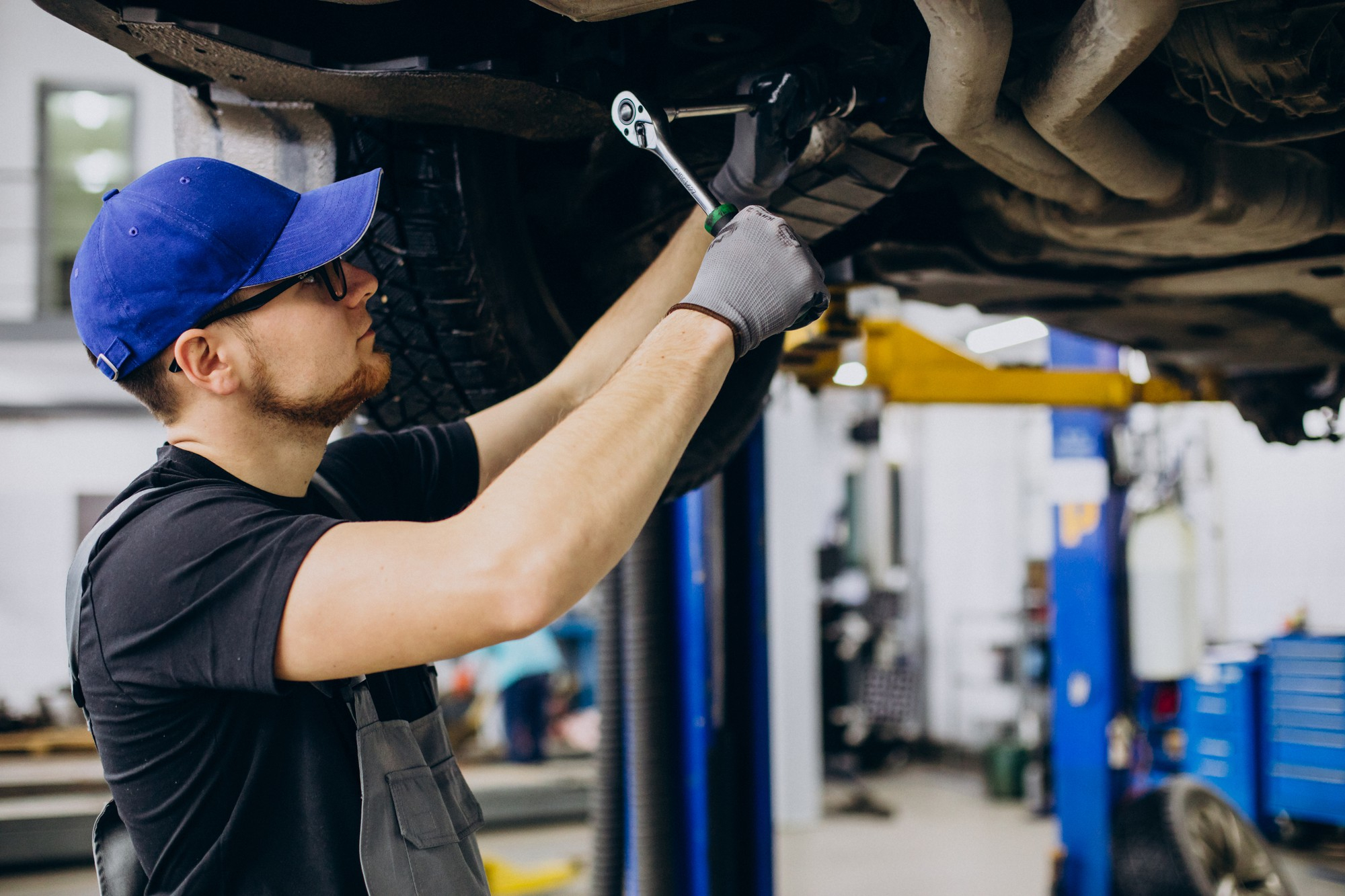
VAS Tires can inspect steering and suspension concerns through its auto mechanic services.
Why Did My Steering Wheel Suddenly Start Shaking?
A vibration that appears suddenly deserves a little more attention than one that has slowly developed over months.
Think about what happened before you noticed it.
- Did you hit a pothole?
- Did you recently have a tire installed?
- Did the vibration begin after clipping a curb?
- Is one tire suddenly losing pressure?
- Does it only happen when you brake?
Those details can help narrow things down quickly.
Rough roads and potholes can be hard on tires, wheels, steering, and suspension. If the shaking started immediately after a hard impact, it is worth having the vehicle checked instead of waiting to see whether the problem goes away on its own.
Is It Safe to Drive With a Shaking Steering Wheel?
That depends on why it is shaking and how severe the problem feels.
A mild vibration caused by a wheel balance problem is very different from a violent shake accompanied by pulling, braking problems, a damaged tire, or loose steering.

Do not keep driving just to see whether a severe vibration goes away.
Pull over somewhere safe if:
- The steering suddenly becomes difficult to control
- The vehicle pulls hard to one side
- A tire appears damaged or is losing air quickly
- You hear grinding or heavy clunking
- The vibration becomes severe
- The car does not feel safe to drive
VAS Tires offers roadside assistance and towing if the vehicle should not be driven to the shop.
How Do I Know What Is Actually Causing the Vibration?
Pay attention to when it happens. That information can make diagnosis much easier.
Shakes mostly at highway speeds: Tires, wheel balance, tire wear, or wheel damage may be worth checking first.
Shakes mainly when braking: The braking system should be inspected.
Shakes while turning: Steering, suspension, wheel bearings, tires, or other components may need attention.
Shakes at many different speeds: A broader tire, wheel, steering, suspension, or mechanical inspection may be needed.
Started immediately after hitting a pothole or curb: Check for tire damage, wheel damage, alignment changes, and suspension problems.
You do not have to figure out which one it is in your driveway. Those details simply give the technician a better starting point.
Stop Guessing and Let Us Take a Look
A shaking steering wheel is one of those problems that can have a simple explanation or point to something that needs attention sooner.
VAS Tires can inspect your tires, wheels, brakes, steering, and suspension to help determine what is actually causing the vibration. We will explain what we find, what needs attention now, and what can wait.

No scare tactics and no guessing. Just a clearer answer about what your car is trying to tell you.
VAS Tires serves Sharon Hill, Delaware County, Philadelphia, and surrounding communities with tire service, auto repair, mobile service, and roadside assistance.
Call (484) 363-2100 or visit VAS Tires at 1344 Chester Pike, Sharon Hill, PA 19079.

Leave A Comment